As a hospice physician I have had the experience many times of sitting with a patient at the very end of life who was struggling to forgive someone they hadn’t seen or spoken to in years. I’ve recognized that the passage from life to death is a difficult process and going through it with a lighter load of emotional and spiritual “baggage” is helpful. So, many patients are motivated to leave behind their anger and resentment even toward people they’ve spent their entire lives hating.
My patient Anne told me several times that she had already forgiven her sister Mary even though they hadn’t spoken to one another for years. She told me that Mary had always been a troublemaker who had hurt her many times in the past, but again, she insisted that she had forgiven her. However a few days before she died Anne desperately wanted to talk to Mary to tell her that she loved her “just as she was.” Anne admitted that she had been carrying a grudge toward Mary all of her life and that she now recognized that true forgiveness meant changing how she viewed and talked about Mary.
While dying was a powerful motivator for Anne to tie up her own loose ends in life, I’ve realized that getting over grudges doesn’t have to wait until our final breaths are taken. In fact, if we manage earlier in life to actually forgive those who have harmed us we can enjoy the benefits of letting go of negative memories and making room for more positive and joyful feelings. Science has validated this idea by showing in studies that there are physical and emotional gains from the practice of forgiveness.
The problem is that it is not easy to get over the wounds of the past. In fact our brains are hard-wired to hold onto the negative events from the past as a form of protection and our egos are resistant altogether to the idea of letting someone “off the hook” who has harmed us.
So forgiveness is a practice that takes work to accomplish. But it’s so important that I’ve spent my entire adult life working on forgiveness as a spiritual practice. And I also included it as one of the “7 lessons from the dying” in my book What Really Matters. I’ve learned that there are several mindset shifts that have to take place in order to forgive. Here are some of the shifts in thinking that are necessary and a practice that can help you begin to forgive:
Life is a classroom.
The first step toward being able to let go of grudges is to begin to see that life is simply one learning opportunity after another. During our time here on Earth we are presented with a series of challenging lessons and we can choose whether to learn something from them or not.
The people in our lives who cause us the greatest difficulties are actually teachers who can help us grow if we choose to see life from that perspective.
You’re not entitled to a life free from difficulties.
We often believe that the harm that has come to us throughout the course of life should never have happened, that it wasn’t fair or deserved. We hang on to our grudges against other people as a badge to prove how we have been victimized by life. It is true that life isn’t fair but it was never intended to be. We are participants in a cycle of life that contains both birth and death and an equal measure of pain and joy. So we cannot expect that we should avoid pain in our lifetimes and we need to learn to get over being angry that this how things are.
The past no longer exists.
Whatever happened before this very moment exists now only in your memory. You are using your own energy and life force to keep your memories of the past alive and if they are negative memories they can exhaust you, making it impossible to enjoy all the positive little moments that life could offer you right now. No matter what has happened in the past this present moment is brand new and you have the opportunity to enjoy it if you choose. Look around and you’re bound to see something beautiful in your life if you are not totally depleted from carrying around your old resentments.
You can make yourself whole again.
Even if the person who has harmed you in the past has no remorse for their behavior, you can heal the anger you carry for them. You don’t have to sentence yourself to years of “hard labor” hauling the burden of that person’s bad behavior in your life. He or she may never apologize or even recognize the pain that has been caused but you can let go of it anyway. In fact the best revenge as has been said, could be a life well-lived and fully enjoyed in spite of pain and difficulties.
It’s not your job to punish other people.
Life will bring those who have hurt you plenty of difficulties of their own—you can release them from your anger without worrying that you are letting them “off the hook.” Don’t waste your time and energy wishing suffering on others because that will only punish you further. Don’t allow other people to continue to bring harm into your life by hating them—hatred is bad for your health and doesn’t bring you satisfaction anyway.
Look at life experiences from different perspectives.
One healing practice for forgiveness is the “4-View Process” in which you intentionally look at experiences through different lenses. Use your journal to write about 4 Views of the situation that is causing you pain. The 3rd-person view describes the facts of the event as a reporter might write in a newspaper article; the 2nd-person view is from the vantage point of the person you have a grudge against; the 1st-person view looks inside your own memories of the event for other hidden feelings; and the Galaxy View is the perspective of a wise teacher or guide who is helping you see ways you can grow from this experience and find compassion and love within your pain.
Rituals can help you let go.
To finally release an old grudge it can be helpful to use a ritual that symbolizes being done with the past and moving on to this present moment. Some useful practices include burning sticks or pieces of paper in a campfire to represent clearing away what you no longer want to carry, floating flower petals down a stream, or blowing leaves or seeds into the wind. These physical actions can create a powerful shift internally as you mark the transition that has taken place.
Forgiveness may be one of the most difficult tasks we are given the opportunity to learn during this lifetime but it is also one of the most rewarding. You can reap the benefits during the last hours of your life if you want to wait until that moment to let go or you can start whittling away at your grudges right now. The choice is yours to make, but trust me, you have no idea how good forgiveness feels until you’ve tried it!
Download The Forgiveness Toolkit for some additional support in getting over your grudges.
 If you are thinking of traveling to help

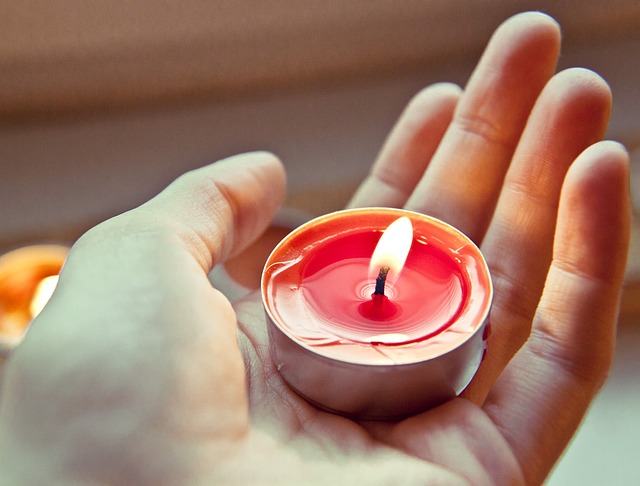 At many churches and cathedrals you can donate a few coins and light a special prayer candle. This has been a powerful ritual for me during many of my travels through Europe, which often include visits to religious shrines.
 I often gather flower petals, leaves and sticks and “fill” them with whatever I need to release. Then I toss them into the water flowing downstream so I can watch as they are physically carried away from me.
 After my father’s death I traveled back to my hometown with my husband and two small children to help make funeral arrangements and be with family. My cousin took us in and housed us in her home for an entire week so we wouldn’t have to stay in an impersonal hotel. She cooked nourishing meals for us, watched my children when I needed time alone, and sat up listening to my stories late at night when I couldn’t sleep. Her lovingkindness made all the difference for me in my own grief process and I left her home feeling much stronger than when I had arrived.
 Several years after my father’s death I spent a long weekend alone at a hot springs resort in the mountains so that I could do some thinking and writing about the impact of his suicide on my life. I had a profound experience there as I confronted old fears and anger and found a new level of forgiveness for him. But it was only possible because I was there alone and had time to go deep into my own dark emotions.
 I once participated in a 60-mile walk to raise funds for breast cancer research, motivated by the deaths of two friends from the disease and the recent diagnosis of my young niece with breast cancer, as well. I trained for several months before the walk, which allowed me ample time to contemplate the nature of serious illness and death and to dedicate my walk to a higher purpose. During the walk itself I had many inspirational encounters that helped me see the connections between all of us—those who walked and those who were struggling with cancer. Through that walk I reached a new level of spiritual understanding about death and loss that helped me immensely over the years that followed.
 On many occasions after my father’s death I returned to the cabin he had built in the mountains in a place he dearly loved. Spending time there helped me recall happy moments from the past and also provided me with a tangible sense that Dad lived on through the cabin and through the trees, streams and wildflowers that surrounded this very special place. I could sit next to his favorite fishing hole and still hear his laughter and see him casting his fly line above the water: Dad was with me again in those moments and I felt that our connection was stronger than ever before. Though I also experienced pain through these memories, I came to terms with my grief a little at a time with each and every visit.
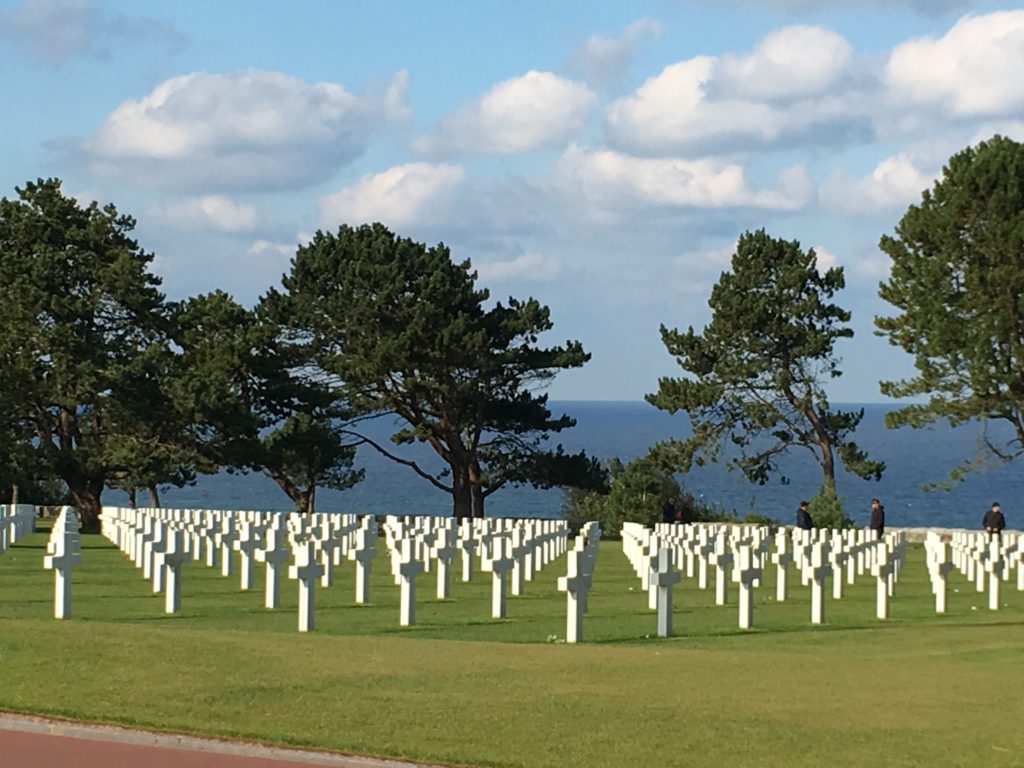 As I sought answers for my father’s suicide I began to suspect that his experiences during World War II played a key role in the depression and anxiety that had plagued him for years. I researched the history of his army division to the best of my ability and learned that he had been part of the invasion at Normandy as well as the Battle of the Bulge. On a subsequent trip to France I visited Omaha Beach and many other historic sites in Normandy with the help of a knowledgeable guide. Walking the beach where so many died during the invasion deepened my awareness of the trauma Dad and other soldiers experienced during the war and I felt that I finally understood him thoroughly for the first time in my life.
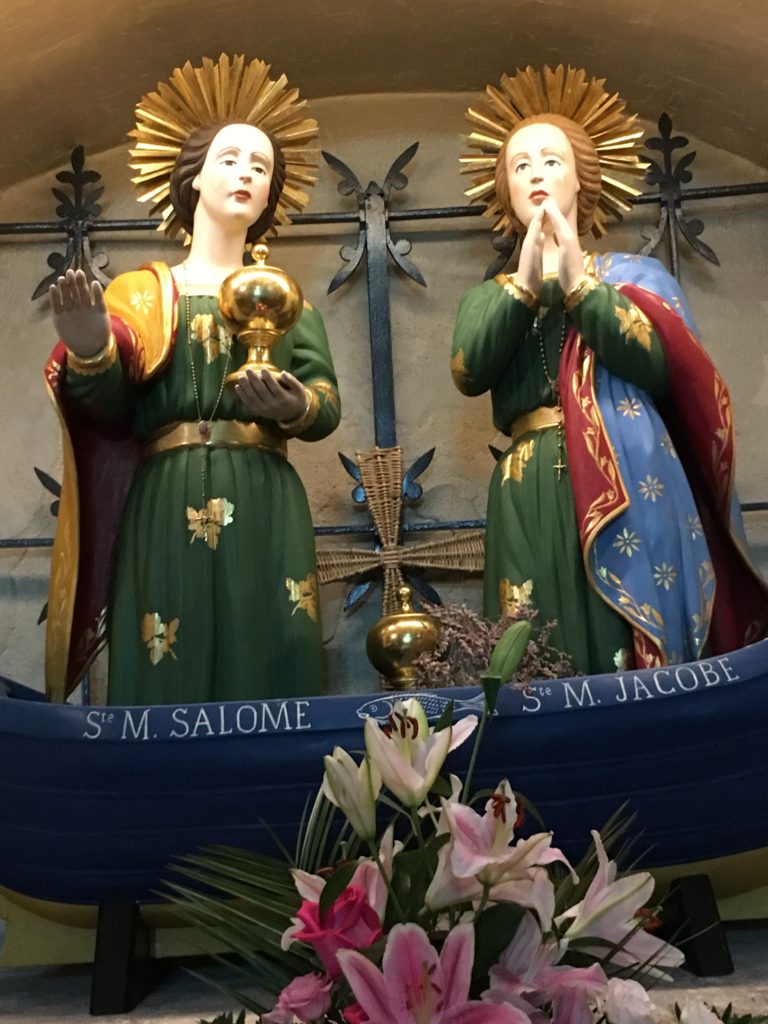 Once on a trip to France I felt inspired to take a bus to a small village nearby, without knowing what I would find there. I wandered the little streets and came upon a church that attracted my attention. When I stepped inside I heard angelic music that filled the entire space. A soloist was practicing her songs for Sunday mass and I was treated to a spontaneous and inspirational concert as I sat within that comforting space. I could not have planned or scheduled this special experience on my own, but it transformed my entire trip.
 In previous